Welcome to the Parish of Dalton, Ireleth and Askam
About Us
We are a Christian community rooted on the beautiful Furness Peninsula, worshipping across two churches—St Mary’s, Dalton-in-Furness, and St Peter’s, Ireleth.
At the heart of our life together is the joy of the gospel and the trust we place in God’s love in all things.
Our churches are places of prayer, worship, and welcome. Week by week we gather to celebrate God’s presence—through Holy Communion, baptisms, weddings, and services of remembrance—finding strength and hope in Christ. That worship overflows into daily life as we serve our communities with kindness, friendship, and care.
We believe God’s love is for everyone. Whether you are a lifelong Christian, new to faith, or simply exploring, you will find an open door and a warm welcome here.
Come and share in the life of our parish. Together we are discovering God’s love, growing in faith, and offering the light of Christ to the world.
You are most welcome among us.
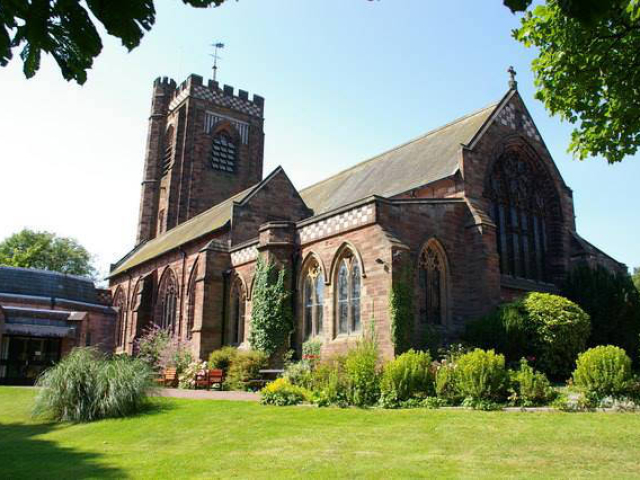
St Mary’s, Dalton-in-Furness
St Mary’s stands on a site with exceptionally ancient Christian roots. Evidence suggests that a church existed here as early as the 8th century, and we know for certain that by 1138 a church was already established.
Over the centuries, the old buildings underwent rebuilding and adaptation. A medieval church was replaced in the early 19th century (1825-26 and again in 1830) under the designs of George Webster.
By the 1880s, the congregation and local benefactors felt the need for a larger, more imposing building to reflect Dalton’s importance in the region and to keep pace with growth. Thus, between 1883–1885, the current church structure was built, replacing the earlier 19th-century church. The architects were Paley & Austin, noted for their high-quality ecclesiastical work.
The cost of construction was about £11,550, much of which was provided by benefactors including James Ramsden, Henry Schneider, the Duke of Devonshire, and the Duke of Buccleuch.
Architecturally, the building is in a Gothic Revival style, especially in a 14th-century Decorated Gothic idiom, built of red sandstone with distinctive red and white chequered stonework, particularly noticeable on the tower and upper walls. It seats roughly 700 people.
Inside, St Mary’s preserves links with the past:
- A 14th-century font, much weathered, with heraldic shields from Furness Abbey.
- Medieval stained glass fragments (from about 1320-1360) in the north porch believed to come from earlier churches on the site.
The churchyard is also historically significant. Among its notable memorials is the grave of George Romney, the famous 18th-century portrait painter who was born in Dalton, and who died in 1802.
In more recent times, in 1979-80, a Parish Centre was added adjacent to the church, linked via the south porch, to serve both worship and wider community needs.
St Mary’s remains a Grade II* listed building, recognized both for its architectural merit and its deep historical roots in the life of Dalton and the Furness Peninsula.
St Peter's, Ireleth
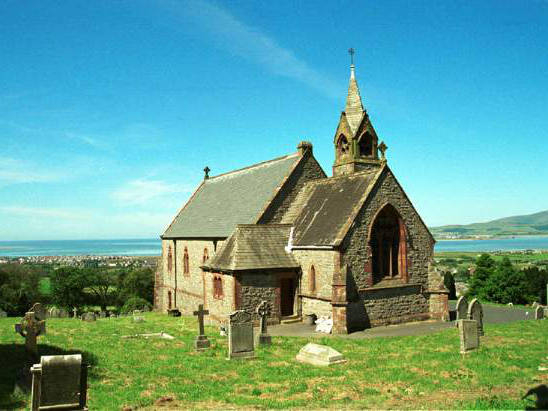
St Peter’s Church sits rising above the villages of Ireleth and Askam, overlooking the Duddon Estuary and the Irish Sea. Dedicated on St Peter’s Day, 29th June 1865, it replaced an earlier chapel, meeting the spiritual needs of a growing community.